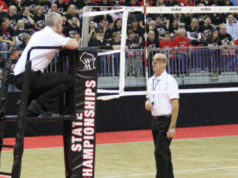
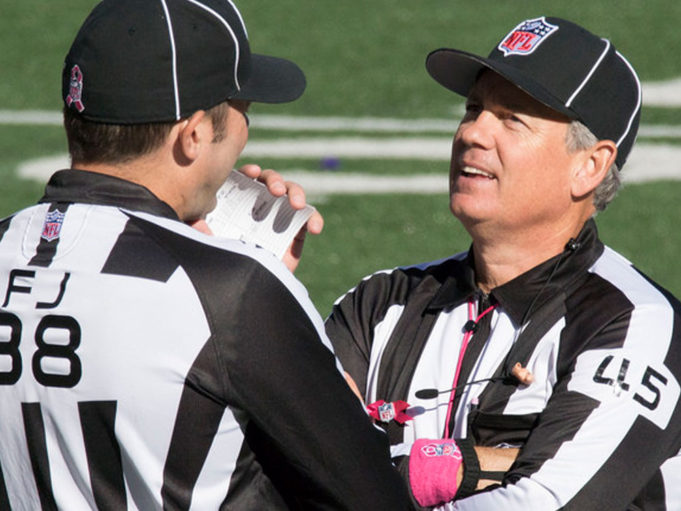
Why are some officials hesitant to go to a partner for help on a play? If getting the call right really matters to us, and our partner might have information that would help get it right, why the reluctance?
Here are a few reasons, along with some thoughts that might invalidate those reasons.
We don’t want to be perceived as being unable to make the call on our own.
It doesn’t show weakness to ask for help. On the contrary, it makes the crew as a whole look stronger. Crew meetings should be brief and few in number. But you shouldn’t hesitate to get information that could help you make the correct call.

After we confer, the team that didn’t benefit will be mad.
If you base your calls on how players, coaches and fans will react, you’re in the wrong business. In the end, how you feel about the call is more important than how others feel about it.
If a call is changed, the coaches will want us to ask for help the rest of the day.
Let ’em ask! Unless the rules of the sport you’re working mandate that you must get help when asked, you don’t have to grant such requests. Save your consultations for especially difficult plays or those in which circumstances didn’t permit you to see the play.
If you go for help and the other official didn’t see it either, you’re in deep doo-doo.
There will be times when a partner or crewmate can provide no help. In that case, use the information you have at hand. Did the ball change direction, leading you to believe it was touched? Did the player of one team celebrate and the opponent appear glum? Sometimes your gut is more reliable than your eyes.
A final note: If you find yourself needing help once or twice every game, it’s time to brush up on your mechanics and positioning.

What's Your Call? Leave a Comment:

Note: This article is archival in nature. Rules, interpretations, mechanics, philosophies and other information may or may not be correct for the current year.
This article is the copyright of ©Referee Enterprises, Inc., and may not be republished in whole or in part online, in print or in any capacity without expressed written permission from Referee. The article is made available for educational use by individuals.